 20% OFF Start Challenge Code:





Finding the most affordable entry point into professional market speculation requires looking beyond the initial sticker price. The cheapest prop firms typically offer smaller evaluation accounts starting between $25 and $50 for funding tiers ranging from $5,000 to $10,000. However, the true mathematical cost depends heavily on hidden data fees, platform activation charges, and the stringency of trailing drawdown rules. Traders seeking optimal value must balance low upfront costs with favorable profit splits, refundable evaluation fees upon passing, and completely transparent trading conditions.
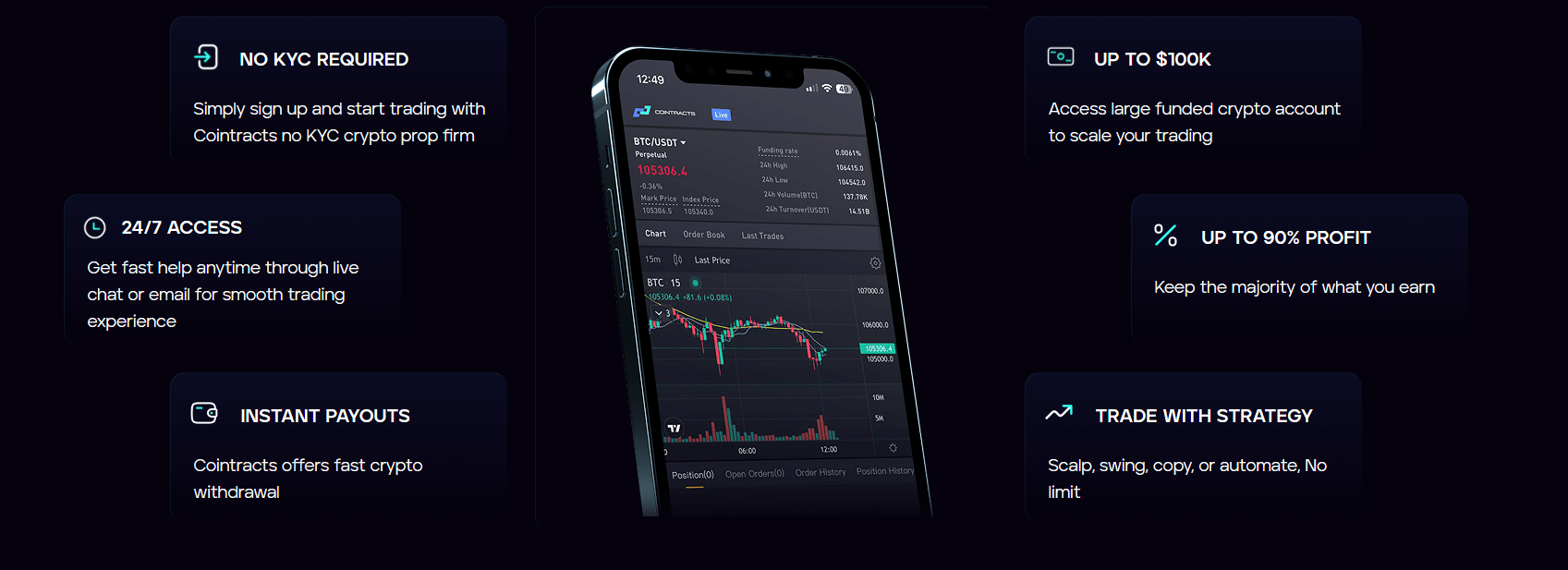
Table of Contents
- Understanding Evaluation Fees in Proprietary Trading
- Top Ranking: Lowest Cost Evaluation Accounts Under $50
- Mid-Tier Value: Best $100,000 Accounts for the Money
- The Impact of Drawdown Rules on Actual Cost
- One-Step vs. Two-Step Challenges: Price Discrepancies
- Identifying Hidden Charges and Monthly Subscriptions
- Crypto and Futures Focus: The Cointracts Advantage
- Refundable Fees: Maximizing Initial Investments
- Profit Splits Compared to Upfront Costs
- Selecting the Most Cost-Effective Firm for Your Trading Style
Understanding Evaluation Fees in Proprietary Trading
Proprietary trading companies require candidates to prove their market competence before risking actual corporate capital. Evaluation fees serve a dual purpose within this business model. Primarily, they act as a risk mitigation tool, ensuring that participants have financial “skin in the game,” which discourages reckless behavior and gambling mentalities. When traders pay for a challenge, they are statistically more likely to adhere strictly to risk management parameters and trade responsibly.

Furthermore, these upfront payments cover the massive operational infrastructure required to run a global trading enterprise. Providing real-time market data, maintaining low-latency server connections, offering advanced charting software, and managing customer support all carry significant ongoing expenses. By charging for evaluations, companies can maintain institutional-grade technology stacks while simultaneously filtering out unqualified participants.
Top Ranking: Lowest Cost Evaluation Accounts Under $50
For individuals with limited capital, micro-accounts provide a low-risk gateway into the funded trading ecosystem. Companies offering $5,000 to $10,000 challenges often price their evaluations between $25 and $50. These entry-level tiers are mathematically designed to test consistency without requiring traders to leverage their own life savings. It is crucial to scrutinize the trading parameters attached to these budget-friendly options, as aggressive profit targets can artificially inflate the difficulty.
When analyzing the sub-$50 category, traders must assess the specific asset classes available. Many budget-friendly options restrict participants to standard forex pairs, entirely excluding volatile instruments like cryptocurrencies or specific commodities. Finding an inexpensive evaluation that still permits flexible, multi-asset trading is the hallmark of a high-value proprietary firm.
| Account Size | Average Cost Range | Typical Profit Target | Target Audience |
|---|---|---|---|
| $5,000 | $25 – $35 | 8% – 10% | Beginners, Strategy Testers |
| $10,000 | $40 – $55 | 8% – 10% | Consistent Micro-Traders |
Mid-Tier Value: Best $100,000 Accounts for the Money
The $100,000 funded account remains the industry gold standard, offering enough buying power to generate substantial returns without requiring massive, high-risk position sizing. Pricing for these mid-tier accounts fluctuates wildly across the industry, typically landing anywhere from $350 to $600. The discrepancy in pricing usually correlates directly to the leniency of the trading rules and the speed of the payout schedule.
Securing the most affordable $100,000 account involves calculating the cost-per-thousand dollars of funding. An aggressively priced $400 account that features strict time limits and trailing drawdowns might ultimately cost more through multiple failed attempts than a $550 account boasting unlimited time and static drawdowns. Evaluating the raw mathematical probability of passing based on the established ruleset is just as critical as analyzing the initial purchase price.
The Impact of Drawdown Rules on Actual Cost
A seemingly inexpensive entry fee can quickly become a massive financial drain if the firm implements predatory drawdown mechanics. Trailing drawdowns, which calculate maximum loss limits based on the highest open equity rather than closed balances, are notorious for forcing traders into failure. When a winning trade retraces before hitting a take-profit order, the trailing limit follows the equity peak, severely constricting the trader’s breathing room on subsequent trades.
Conversely, static drawdown limits or end-of-day drawdown calculations provide a much fairer environment. While firms offering static limits might feature a slightly higher initial evaluation cost, the probability of requiring multiple retries plummets significantly. An intelligent capital allocator understands that paying a 15% premium upfront for favorable drawdown mechanics ultimately results in a lower total expenditure.
One-Step vs. Two-Step Challenges: Price Discrepancies
The Efficiency of One-Step Evaluations
One-step evaluation models appeal to highly aggressive, confident market participants who wish to access corporate capital as rapidly as possible. Because the risk to the proprietary firm is elevated—requiring only a single phase of verification—these challenges generally command a higher price point. Traders must hit a specific profit target, usually around 10%, while adhering to daily and maximum loss limits.
Despite the higher upfront cost, one-step challenges can represent superior value for highly profitable individuals. Bypassing a second evaluation phase means saving weeks or even months of time, allowing successful participants to begin generating real profit splits much faster. The opportunity cost of spending an extra month in a simulation phase often exceeds the premium paid for a one-step challenge.
The Stability of Two-Step Evaluations
Two-step evaluations remain the most prevalent structure within the industry, typically offering the absolute lowest initial purchase price. The dual-phase system requires participants to prove consistency over a longer duration, usually demanding an 8% return in phase one followed by a 5% return in phase two. Because the firm has more data to verify the trader’s edge, they can offer these packages at steep discounts.
This structure is highly recommended for newer traders or those utilizing long-term swing trading strategies. The lower price barrier reduces psychological pressure, while the extended evaluation period forces the development of disciplined, institutional-level risk management habits. By surviving both phases, traders prove their resilience across varying market conditions.
Identifying Hidden Charges and Monthly Subscriptions
Many poorly regulated companies lure candidates in with shockingly low upfront evaluation prices, only to aggressively monetize them on the back end. Monthly subscription fees for trading platforms or Level 2 market data can easily eclipse the cost of the initial challenge if a participant takes several months to reach the profit target. It is imperative to read the fine print regarding recurring technological fees.
Another prevalent hidden cost is the post-passage activation fee. Certain businesses require successful candidates to pay a mandatory setup charge ranging from $100 to $150 before releasing the live funded credentials. Transparent organizations eliminate these predatory practices entirely, ensuring that the sticker price listed on the website represents the absolute maximum out-of-pocket expense for the trader.
Crypto and Futures Focus: The Cointracts Advantage
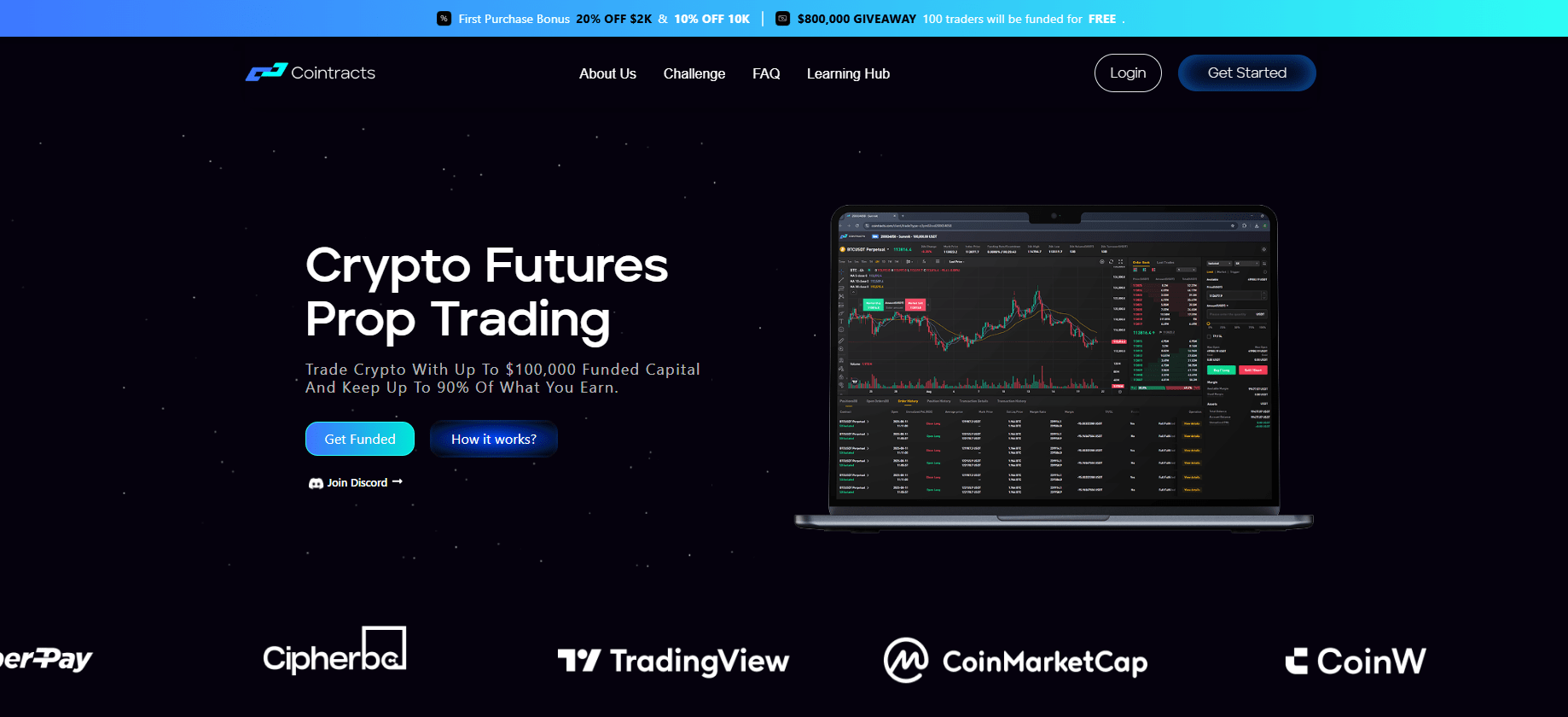
The digital asset space requires a specialized infrastructure that traditional forex proprietary firms struggle to provide. Cointracts bridges this gap by offering heavily optimized funding solutions explicitly tailored for cryptocurrency and futures market dynamics. By eliminating archaic trading restrictions and focusing on modern asset classes, the platform delivers unparalleled flexibility for digital asset speculators.
From a cost-efficiency standpoint, Cointracts heavily disrupts the traditional pricing model. By leveraging advanced internal risk algorithms and deep liquidity integrations, they offer ultra-competitive entry fees without sacrificing execution speed or reliable payout structures. Traders benefit from massive scalability, high-leverage digital asset trading, and a transparent evaluation framework designed to reward authentic trading skill rather than penalize minor market volatility.
Refundable Fees: Maximizing Initial Investments
The ultimate metric of an affordable funding program is whether the initial purchase price is returned upon successful completion. Industry-leading firms use the evaluation fee purely as a screening mechanism, rebating 100% of the cost back to the trader during their first official profit split. This transforms the evaluation from a sunk cost into a temporary security deposit.
Companies that refuse to refund evaluation fees are actively penalizing successful participants. When building a long-term business relationship with a funding provider, the refund policy serves as a massive indicator of the firm’s core philosophy. Organizations that rebate fees demonstrate a clear desire to profit with their traders, rather than profiting from failed evaluation attempts.
Profit Splits Compared to Upfront Costs
An inexpensive evaluation loses its appeal entirely if the subsequent profit split heavily favors the corporate entity. A standard industry benchmark sits at an 80/20 split in favor of the trader. If an ultra-cheap firm only offers a 50/50 or 60/40 split, the trader will lose thousands of dollars in potential revenue over the lifespan of the funded account, completely negating the $50 or $100 saved during the initial purchase.
Superior scaling plans often compound these splits, pushing payout ratios as high as 90% or even 100% for the first few thousand dollars earned. Analyzing the entire economic lifecycle of the account is vital. A slightly higher upfront fee paired with a 90% payout ratio and aggressive capital scaling rules will infinitely outperform a bargain-bin evaluation featuring capped profits and restrictive payout schedules.
Selecting the Most Cost-Effective Firm for Your Trading Style
Aligning the specific ruleset of a proprietary company with your distinct trading methodology is the final step in securing actual value. Scalpers who rely on high-frequency, low-margin transactions require raw spread, zero commission structures, and minimal slippage. Paying a lower fee for a firm with wide spreads will result in immediate strategy failure, rendering the initial savings irrelevant.
Conversely, swing traders who hold positions overnight or through weekends must prioritize firms that permit holding through major macroeconomic news releases and market closures. Identifying your precise operational requirements—be it crypto accessibility, specific drawdown mechanics, or high leverage—and then finding the lowest-priced provider matching those exact criteria ensures the highest statistical probability of securing and maintaining a fully funded account.
