 20% OFF Start Challenge Code:





Featured Snippet: Prop firms are not facing a complete global shutdown or absolute ban in 2026; rather, the sector is undergoing intense regulatory restructuring. Financial authorities are aggressively targeting companies that offer retail Contracts for Difference (CFDs) disguised as live institutional accounts. Consequently, surviving entities are rapidly transitioning toward legally robust models, specifically utilizing centralized futures, cryptocurrency contracts, and highly transparent simulated evaluations to maintain compliance and ensure uninterrupted operations.

Table of Contents
- 1. The 2026 Regulatory Landscape for Proprietary Trading
- 2. Why Did Major Trading Platforms Suspend Licenses?
- 3. Are Funded Evaluation Programs Considered Illegal?
- 4. The Pivot Toward Futures and Cryptocurrency Contracts
- 5. How Regulatory Bodies View Simulated Trading Environments
- 6. Geofencing and Jurisdictional Restrictions for Traders
- 7. What Happens to Trader Payouts During Operational Suspensions?
- 8. Identifying Resilient and Compliant Funding Partners
- 9. The Role of Blockchain and Smart Contracts in Modern Funding
- 10. Preparing Your Trading Strategy for Industry Shifts
1. The 2026 Regulatory Landscape for Proprietary Trading
The financial sector is witnessing a paradigm shift in how independent traders access institutional capital. Financial watchdogs, including the Commodities and Futures Trading Commission (CFTC) in the United States and the European Securities and Markets Authority (ESMA), have escalated their scrutiny of the funded trader industry. Their primary objective is not to eradicate proprietary trading but to eliminate systemic risks associated with unregistered retail brokerages masquerading as professional funding companies.
Regulation inherently brings legitimization to the financial markets. The actions taken by these regulatory bodies serve to enforce strict boundaries between gamified retail trading applications and authentic capital allocation models. Companies that fail to adapt to these stringent compliance measures face severe penalties, asset freezes, and forced operational halts. Conversely, organizations embracing transparent operational structures are securing a permanent, legal foothold in the financial ecosystem.
2. Why Did Major Trading Platforms Suspend Licenses?
The sudden disruption in the proprietary funding space was primarily catalyzed by leading technology providers revoking software licenses. Major platform developers faced mounting pressure from international regulators regarding the facilitation of unregulated trading activities, particularly concerning United States citizens. Because technology providers can be held partially liable for the compliance failures of their licensees, they initiated mass purges of any entity operating in regulatory gray areas.
This technological bottleneck forced companies to migrate entirely away from legacy systems like MetaTrader 4 and MetaTrader 5. Brokerages acting as intermediaries also severed ties with funding companies to protect their own regulatory standing. The resulting chaos highlighted the industry’s dangerous over-reliance on single points of failure, prompting a necessary evolution toward diversified, proprietary trading technologies and decentralized platforms.
3. Are Funded Evaluation Programs Considered Illegal?
The fundamental legality of funded evaluation programs hinges entirely on their operational framework and execution. Selling an educational evaluation—where a user pays a fee to demonstrate their skills within a simulated data environment—is broadly considered legal under global commerce laws. It is classified as a service or a digital product rather than a financial brokerage transaction, provided the company does not solicit external investments or promise guaranteed financial returns.
The legal threshold is crossed when an organization begins acting as an unregistered broker-dealer. This occurs if a company takes the opposite side of a trader’s live market execution (B-booking) without the appropriate financial licenses. Authorities strictly penalize operations that blur the lines between simulated skill assessments and actual live market making, demanding absolute clarity in customer agreements and data handling protocols.
4. The Pivot Toward Futures and Cryptocurrency Contracts
Because traditional Contract for Difference (CFD) markets present massive regulatory hurdles—especially within North America—the industry is actively abandoning them. Futures markets operate on centralized clearinghouses like the Chicago Mercantile Exchange (CME), offering a highly regulated, transparent environment that regulators inherently trust. This standardization removes the conflict of interest often found in CFD pricing models.
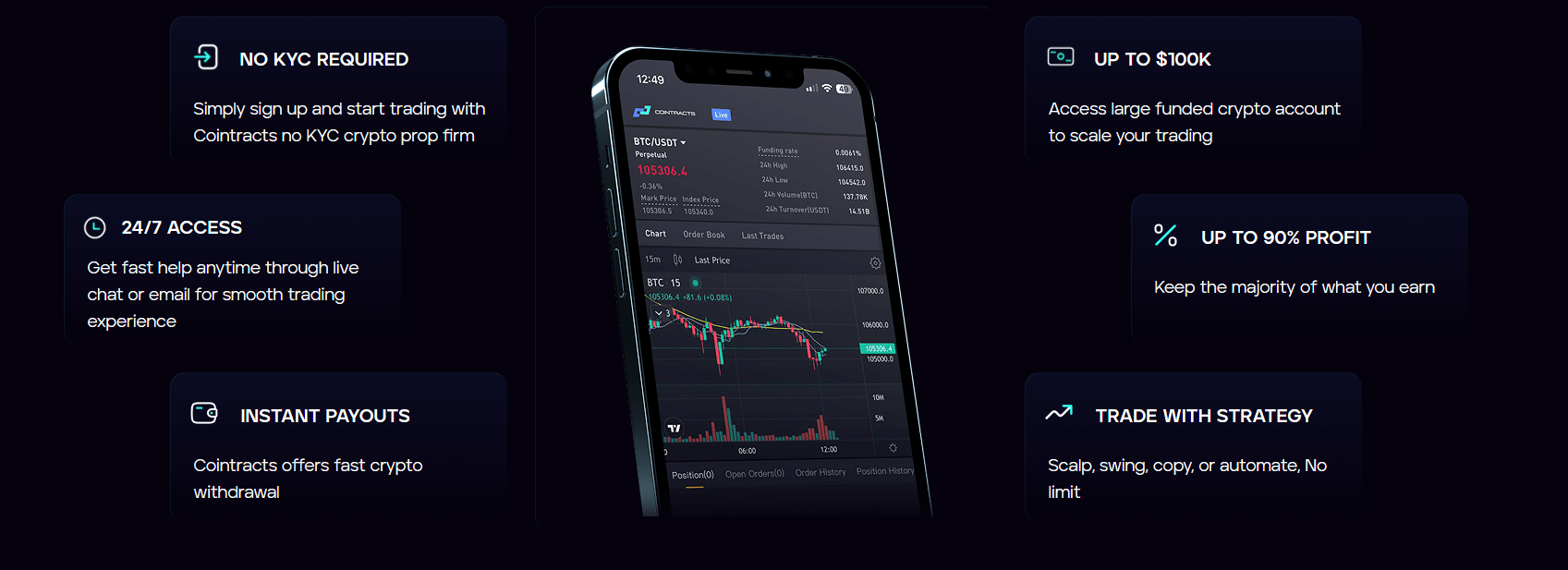
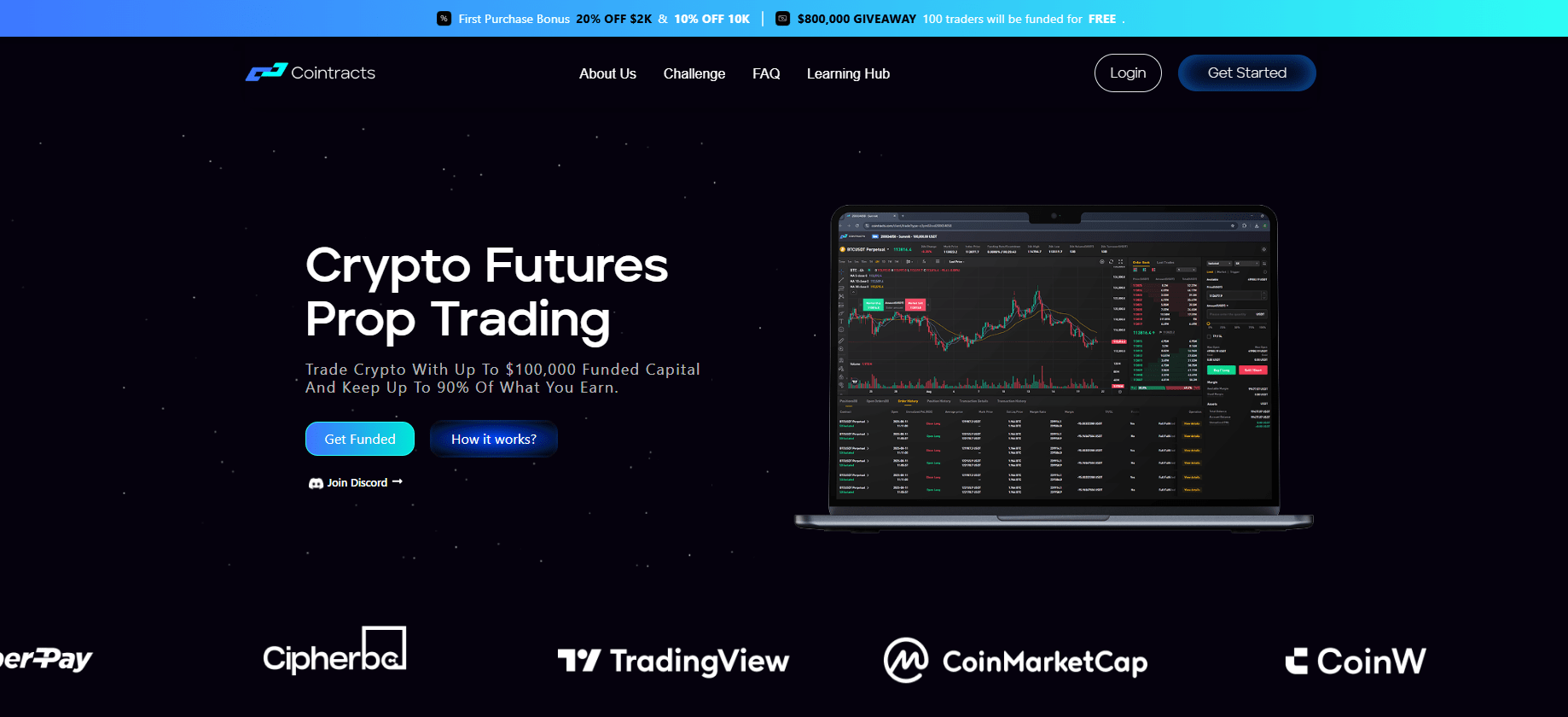
Simultaneously, the decentralized nature of digital assets has birthed a new frontier for capital allocation. Companies like Cointracts are pioneering this space by providing sophisticated infrastructure tailored exclusively for cryptocurrency contract evaluations. By leveraging the inherent transparency and global accessibility of digital assets, Cointracts empowers talented individuals to secure funding without the bureaucratic friction associated with outdated legacy fiat systems.
5. How Regulatory Bodies View Simulated Trading Environments
Regulators maintain a pragmatic stance on simulated trading environments, viewing them as essential tools for risk management and educational development. Supplying users with virtual capital attached to live market data feeds is a completely legitimate enterprise. The critical distinction lies in the marketing language; companies must explicitly state that the evaluations take place in simulated conditions and that the capital is not live retail liquidity.
The scrutiny intensifies regarding how successful simulated data translates into actual monetary compensation. Regulators demand evidence that trader payouts are funded by internal corporate capital or successful copy-trading algorithms in the live market, rather than being recycled from the evaluation fees of failed participants. Transparent compensation structures are now mandatory for survival in the 2026 landscape.
6. Geofencing and Jurisdictional Restrictions for Traders
To navigate the complex web of international financial laws, funding companies have aggressively implemented geofencing protocols. Blocking users based on their IP address and verifiable identity has become a standard compliance measure. Traders residing in jurisdictions with highly restrictive retail trading laws, such as the United States and certain Canadian provinces, frequently find themselves restricted from accessing specific asset classes like foreign exchange CFDs.
Stringent Know Your Customer (KYC) and Anti-Money Laundering (AML) verifications are no longer optional. These security protocols ensure that funding companies are not inadvertently violating international sanctions or facilitating illicit financial flows. While these restrictions create regional barriers, they simultaneously protect the broader operational integrity of the funding company, ensuring long-term stability for eligible participants.
7. What Happens to Trader Payouts During Operational Suspensions?
When a funding organization attracts severe regulatory intervention, the immediate consequence is often the freezing of corporate banking assets. Authorities implement these injunctions to preserve capital for potential restitution, but it leaves active traders in a precarious position. During these operational suspensions, pending withdrawals and generated profits become locked in extended legal limbo, often requiring years of litigation to resolve.
Participants affected by these shutdowns possess limited immediate recourse. The funds trapped within the frozen accounts are usually distributed under the guidance of a court-appointed receiver. To mitigate this severe counterparty risk, traders must rigorously vet the financial backing, regulatory compliance, and payout history of any organization before dedicating significant time and capital to their evaluation metrics.
8. Identifying Resilient and Compliant Funding Partners
Navigating the proprietary capital sector requires a methodical approach to due diligence. Resilient organizations operate with absolute transparency regarding their technological infrastructure, their liquidity providers, and their rules of engagement. They do not employ hidden drawdown metrics or predatory slippage tactics designed to intentionally fail the participant.
To effectively distinguish between high-risk entities and sustainable capital partners, participants must analyze the underlying business model. Sustainable operations prioritize long-term trader profitability, whereas predatory models rely exclusively on constant user failure.
| Operational Metric | Legacy/High-Risk Models | 2026 Compliant Models |
|---|---|---|
| Asset Focus | Retail CFDs, unregulated Forex | Regulated Futures, Crypto Contracts |
| Technology | Rented, white-label MT4/MT5 | Proprietary tech, DXtrade, cTrader |
| Payout Source | Recycled evaluation fees (Ponzi-esque) | Corporate treasury, live copy-trading |
| Compliance | No KYC, offshore anonymity | Strict KYC/AML, jurisdictional blocking |
9. The Role of Blockchain and Smart Contracts in Modern Funding
The integration of blockchain technology is systematically solving the most prominent vulnerabilities within the funding sector. Smart contracts facilitate automated, trustless executions of trader agreements, completely removing human bias from the payout process. Once a participant reaches a predefined profit target and satisfies the risk parameters, the blockchain instantly executes the digital asset transfer, bypassing sluggish traditional banking networks.
Organizations prioritizing cryptocurrency contracts benefit immensely from this technological infrastructure. Ecosystems built by entities like Cointracts utilize these decentralized mechanisms to guarantee rapid, secure, and borderless transactions. This blockchain-centric approach significantly reduces operational overhead while providing participants with immutable proof of liquidity and flawless compensation timelines.
10. Preparing Your Trading Strategy for Industry Shifts
The modern participant must cultivate extreme adaptability to thrive amidst ongoing industry consolidations. Strategies optimized solely for the idiosyncratic spread manipulation of unregulated CFD providers will inevitably fail in centralized futures or highly liquid cryptocurrency markets. Participants must re-calibrate their technical analysis to account for the actual volume and depth-of-market realities present in compliant asset classes.
Diversification remains the ultimate defensive tactic. Relying entirely on a single funding provider exposes the individual to catastrophic counterparty risk. By spreading capital and time across multiple compliant organizations, mastering diverse charting platforms, and focusing on universally applicable price action concepts, professionals can insulate their careers from any sudden regulatory shocks or corporate insolvencies.
