 20% OFF Start Challenge Code:





Prop firms, short for proprietary trading firms, operate by allocating institutional capital to skilled retail traders who pass a rigorous evaluation process. These entities primarily make money through a dual-revenue model: collecting upfront evaluation fees from traders attempting to prove their profitability, and taking a predetermined percentage of the real market profits generated by their funded traders. Advanced risk management, data fee collection, and sophisticated trade-copying systems further compound their operational revenue, allowing them to scale massively without exposing their own funds to unverified market risk.
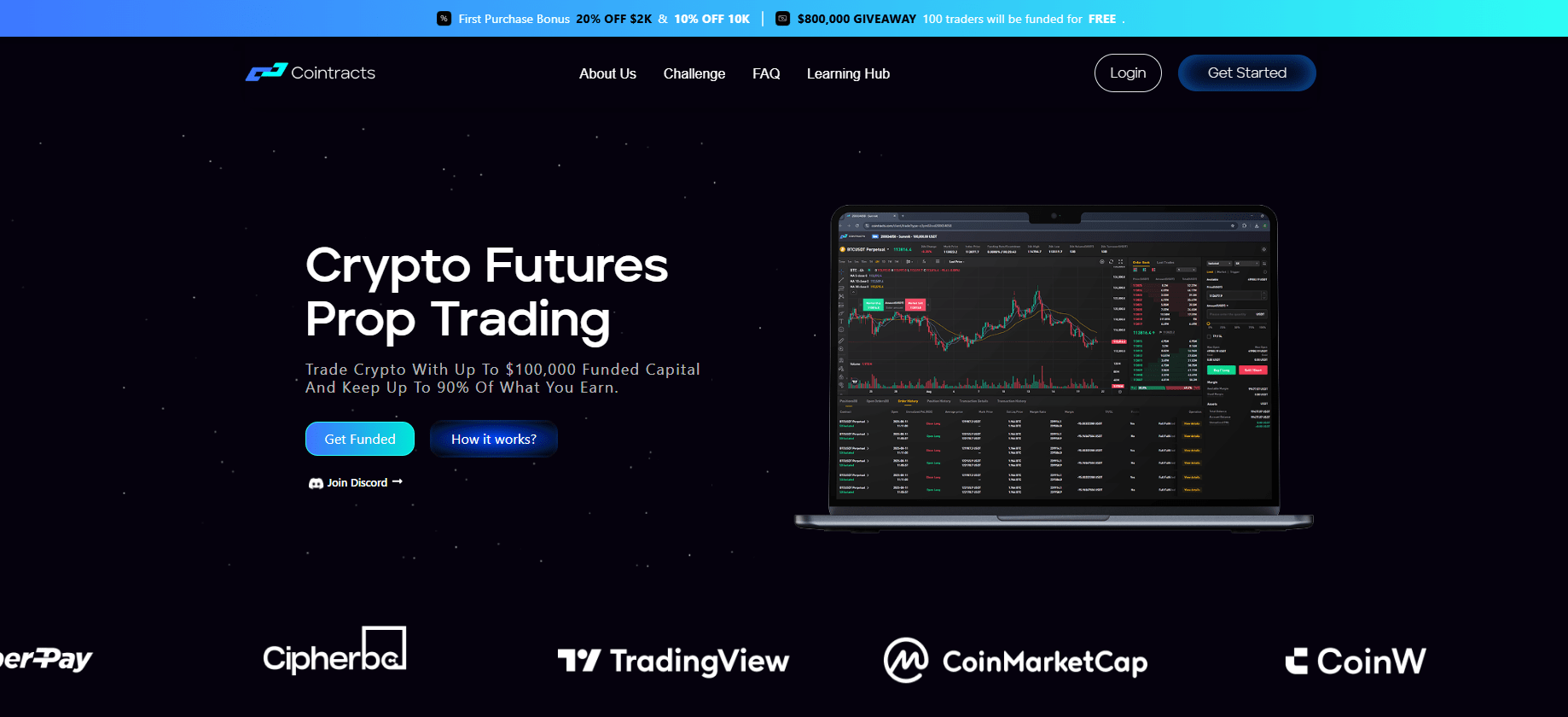
Table of Contents
1. What Is a Proprietary Trading Firm?
2. The Core Mechanism of Funded Trading Accounts
3. The Evaluation Phase: Separating Amateurs from Professionals
4. Profit Splitting: The Mutual Benefit for Traders and Firms
5. Revenue Stream One: Evaluation and Challenge Fees
6. Revenue Stream Two: Live Market Trading and Trade Copying
7. Revenue Stream Three: Risk Management and the B-Book Model
8. Data and Platform Fees in the Proprietary Industry
9. The Evolution of Crypto Prop Firms and Digital Asset Allocation
10. Why Top Tier Traders Choose Proprietary Capital Over Retail Brokerages
11. Navigating Rules, Drawdowns, and Trading Parameters
What Is a Proprietary Trading Firm?
A proprietary trading firm is a financial institution that provides capital to traders, allowing them to execute trades in various financial markets such as equities, forex, commodities, and digital assets. Instead of traders risking their personal savings, the firm absorbs the financial risk in exchange for a substantial share of the profits. This model drastically alters the traditional retail trading dynamic, shifting the focus from personal capital accumulation to pure skill demonstration.

Historically, proprietary trading was confined to Wall Street institutions where hired employees traded the bank’s own money. The modern iteration has democratized this process entirely. Today, remote online platforms offer global access to institutional purchasing power. Anyone with an internet connection and a proven trading strategy can apply, making the financial markets far more accessible to talented individuals lacking upfront capital.
The Core Mechanism of Funded Trading Accounts
The operational framework of a funded trading account relies on meritocracy. Traders must first prove their competence before gaining access to live funds. The firm sets specific parameters, usually dictating maximum daily losses, overall drawdowns, and profit targets. By enforcing these strict boundaries, the institution ensures that only disciplined individuals progress to the funded stage.
Once a candidate successfully demonstrates their ability to generate consistent returns while respecting risk parameters, they receive a funded account. The trader executes their strategies on a simulated or live feed, and the firm mirrors or directly places these trades in the real market. The trader bears zero financial liability for losses incurred on the funded account, providing a psychological advantage that often leads to superior market performance.
The Evaluation Phase: Separating Amateurs from Professionals
To mitigate risk, institutions employ an initial testing period commonly known as a challenge or evaluation phase. Candidates pay a one-time upfront fee to enter this phase. The evaluation typically consists of one or two steps where the individual must hit a specific profit target, such as 8% or 10%, without breaching strict drawdown limits. This phase acts as a highly effective filter, weeding out gamblers, emotional actors, and those lacking a concrete strategy.
During the challenge, individuals trade on a simulated server with real-time market data. The rules are meticulously designed to enforce institutional-grade risk management. For instance, a trader might be given a $100,000 account but is limited to a maximum daily loss of $5,000. Breaching this limit results in immediate account termination. This stringent environment guarantees that only the top percentile of applicants ever touch real institutional liquidity.
Profit Splitting: The Mutual Benefit for Traders and Firms
The cornerstone of the proprietary model is the profit split agreement. Once an individual reaches the funded stage, any profits they generate are divided between themselves and the institution. Standard industry splits heavily favor the trader, often starting at 80/20 and scaling up to 90/10 based on consistent performance. This high payout ratio incentivizes the best talent to remain with the platform long-term.
For the institution, giving away 80% to 90% of the profits is a highly lucrative arrangement. They are crowdsourcing top-tier financial talent without paying base salaries, health benefits, or office overhead. By managing hundreds or thousands of profitable traders simultaneously, the firm aggregates massive returns from the 10% to 20% cut they retain, creating a highly scalable and resilient business model.
Revenue Stream One: Evaluation and Challenge Fees
A significant portion of revenue stems directly from the initial assessment fees. Because trading is an inherently difficult profession, a large majority of applicants fail their evaluations. Statistics show that failure rates can range between 85% and 95%. The upfront fees paid by these unsuccessful candidates form a massive capital pool for the institution.
These fees cover operational costs, platform maintenance, customer support, and, crucially, fund the payouts for the successful minority. While some critics view this as a barrier, it is a necessary economic function. The assessment fee ensures that candidates have “skin in the game,” preventing reckless behavior on the firm’s servers while simultaneously financing the infrastructure required to support the truly skilled professionals.
Revenue Stream Two: Live Market Trading and Trade Copying
When a participant proves exceptional consistency, the institution employs a strategy known as trade copying or A-Booking. In this scenario, the firm takes the data from the funded individual’s simulated trades and executes them in the live market using their own corporate capital. The trader operates in a stress-free virtual environment, completely unaware that their positions are moving real institutional liquidity.
This allows the institution to multiply their returns. If a top performer is trading a virtual $100,000 account, the firm might leverage their internal capital to execute those exact trades at a $1,000,000 size. The trader receives their agreed-upon profit split based on the $100,000 virtual account, while the institution reaps the exponential rewards generated by the larger, internally copied live positions.
Revenue Stream Three: Risk Management and the B-Book Model
Many modern platforms utilize internal risk management systems often referred to as a B-Book model. Under this structure, the firm does not send the funded trader’s orders to the live market immediately. Because the statistical reality is that even funded traders eventually face drawdowns or lose their accounts, the firm simply pays out successful withdrawals directly from their own treasury, which is heavily funded by the influx of assessment fees.
By keeping the risk in-house, the institution acts as the counterparty to the trades. They rely on the statistical probability that long-term losses will outweigh long-term gains across the aggregate user base. Only the most elite, consistently profitable individuals are transitioned to a live market feed, ensuring that the firm’s treasury is never overly exposed to top-tier market extractors.
| Revenue Model | Mechanism | Impact on Firm |
|---|---|---|
| Evaluation Fees | Upfront payments from users taking the challenge. | Provides immediate, high-margin cash flow. |
| A-Book (Copying) | Routing top traders’ positions to live markets. | Generates compounded market profits from elite talent. |
| B-Book (Internal) | Absorbing trades internally without live routing. | Capitalizes on the statistical failure rate of average users. |
Data and Platform Fees in the Proprietary Industry
Beyond evaluations and market profits, institutions frequently generate supplementary income through associated ecosystem costs. Accessing professional-grade trading platforms, deep liquidity feeds, and real-time Level 2 market data incurs significant expenses. Some companies offset these costs by charging monthly data fees or inactivity fees to their users.
Furthermore, reset fees act as another micro-transaction layer. When a candidate breaches a rule during the assessment phase, they are often given the option to pay a reduced fee to reset their account and try again. These compounding micro-transactions create a steady stream of recurring revenue that stabilizes the company’s financial footing during periods of low market volatility.
The Evolution of Crypto Prop Firms and Digital Asset Allocation
The digital asset revolution has created a massive demand for specialized crypto prop firms. Unlike traditional equities or forex, cryptocurrency markets operate 24/7 and exhibit extreme volatility, offering unique opportunities for aggressive wealth generation. Cointracts stands at the forefront of this evolution, providing digital asset enthusiasts with the purchasing power needed to capitalize on massive market swings without risking their own cold storage holdings.
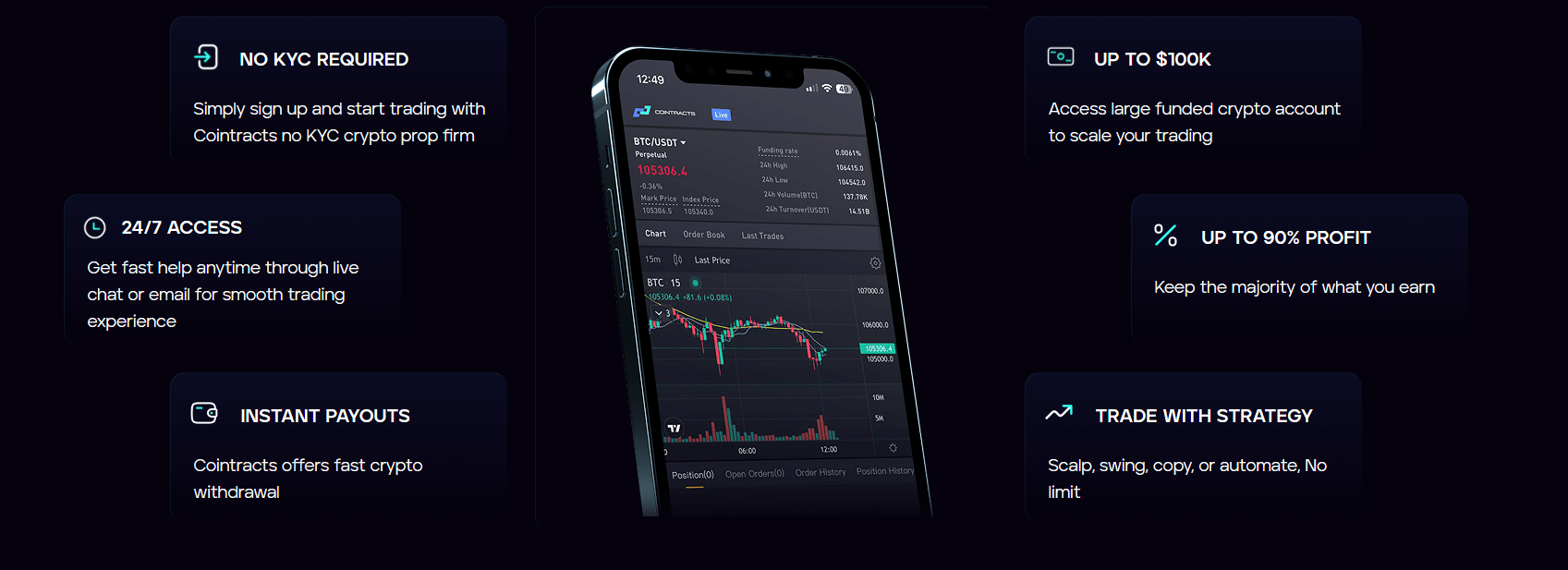
By specializing in digital assets, Cointracts offers an optimized environment tailored specifically for blockchain-based assets. Traders can leverage proprietary capital to execute sophisticated crypto strategies, benefiting from fair evaluations, transparent profit splits, and rapid payouts in digital currencies. This eliminates the sluggish withdrawal processes associated with traditional fiat banking systems, empowering crypto natives to scale their operations efficiently.
Why Top Tier Traders Choose Proprietary Capital Over Retail Brokerages
The shift from retail brokerages to proprietary models is driven by basic mathematics and risk isolation. A retail trader with $5,000 must take massive, reckless risks to generate a meaningful monthly income. This over-leveraging inevitably leads to blown accounts and financial distress. By utilizing proprietary capital, that same individual can trade a $100,000 account, risking only 1% per trade to make substantial monetary gains.
Additionally, the risk isolation is absolute. If a retail trader experiences a catastrophic market gap, they can lose more than their initial deposit, owing money to their broker. In the proprietary model, the firm assumes 100% of the liability. The individual’s personal financial exposure is permanently capped at the cost of the initial assessment fee, creating an asymmetric risk-to-reward ratio that professional operators demand.
Navigating Rules, Drawdowns, and Trading Parameters
To maintain profitability and protect their capital reserves, companies enforce rigid trading parameters that participants must navigate flawlessly. The most prominent of these is the trailing or static drawdown rule. A maximum drawdown limit dictates the absolute lowest point an account balance can reach before it is terminated. This forces individuals to prioritize capital preservation above aggressive profit-seeking.
Other common parameters include restrictions on holding positions over the weekend, trading during major macroeconomic news releases, or utilizing specific high-frequency algorithms. While these rules may seem restrictive, they are designed to mirror true institutional risk management. Mastering these parameters transforms undisciplined participants into calculated risk managers, ensuring long-term sustainability for both the individual and the financial institution providing the backing.
