 20% OFF Start Challenge Code:





To get into a prop trading firm, an aspiring trader must develop a robust skill set, including quantitative analysis, emotional discipline, and risk management. You typically need to build a verifiable trading track record, prepare for rigorous technical interviews or pass a performance-based evaluation. The path you take often depends on the type of firm, whether it’s a traditional institution requiring a specific academic background or a modern online firm that prioritizes proven trading results.
Table of Contents
What Exactly is a Prop Trading Firm?
Foundational Skills Every Aspiring Prop Trader Must Master
Do You Need a Specific Educational Background?
How to Build a Verifiable Trading Track Record
Navigating the Two Primary Paths to a Funded Account
Acing the Interview and Evaluation Stage
What is Your Market? Choosing the Right Firm Type
The Cornerstone of Success: Impeccable Risk Management
What Does a Typical Day for a Prop Trader Involve?
Key Traits That Separate Profitable Traders from the Rest
What Exactly is a Prop Trading Firm?
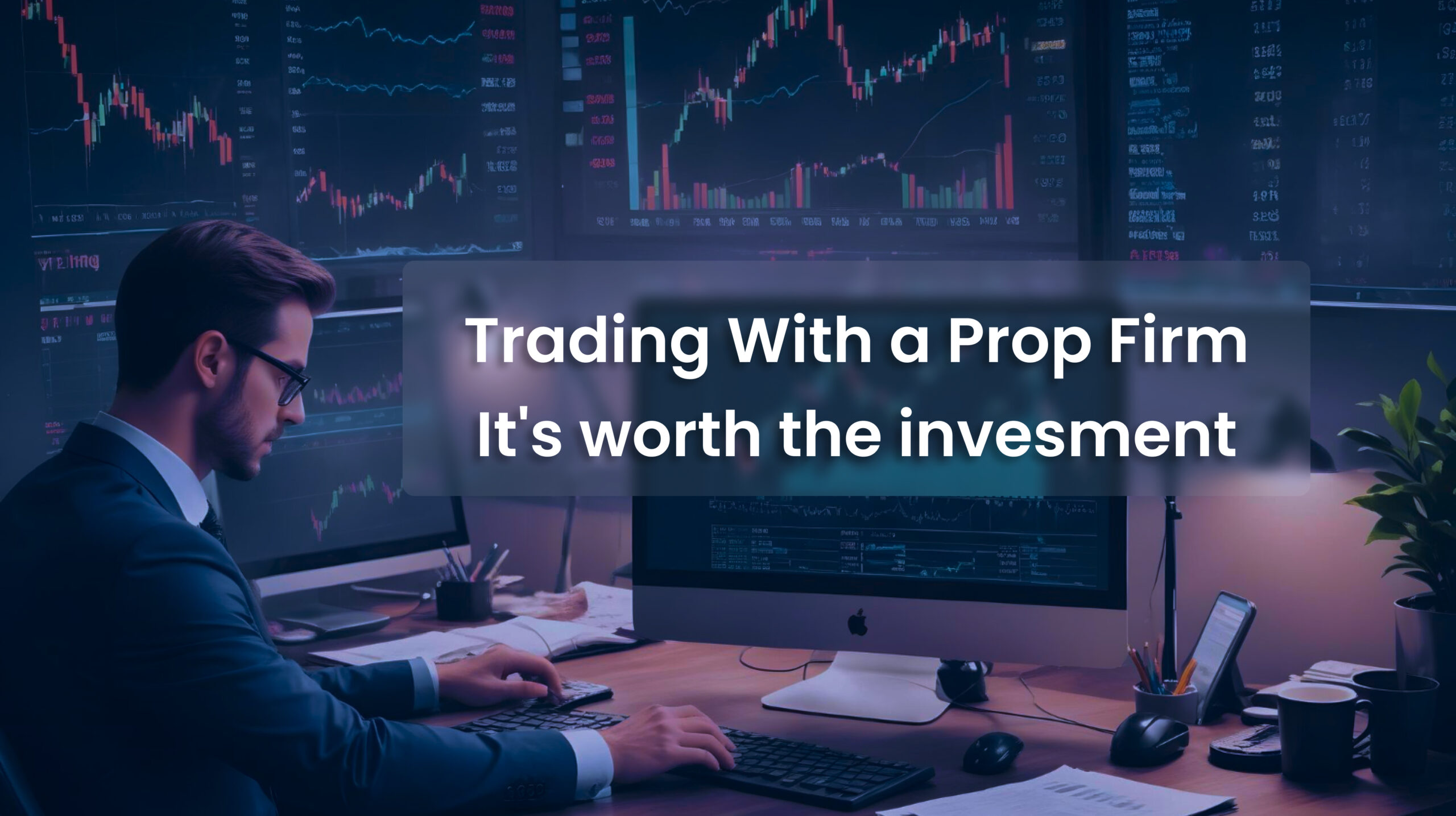
A proprietary trading firm, often called a prop firm or prop shop, is a financial institution that trades stocks, derivatives, bonds, currencies, or cryptocurrencies with its own money. Unlike a brokerage firm that executes trades for clients, a prop firm’s primary aim is to generate direct profits from market activities. Traders at these firms are given access to the company’s capital, advanced technology, and professional resources to execute strategies and capitalize on market opportunities. In return, the trader and the firm share the profits according to a pre-agreed split.
The landscape of proprietary trading has evolved significantly. Traditionally, these firms were exclusive, brick-and-mortar institutions in major financial hubs like New York, Chicago, and London, primarily recruiting from elite universities. Today, the industry includes a new wave of remote-first, online prop firms. These modern firms have democratized access to trading capital, allowing talented individuals from anywhere in the world to prove their abilities through evaluation challenges. This shift has opened doors for traders who may not have a conventional financial background but possess demonstrable trading talent.
Foundational Skills Every Aspiring Prop Trader Must Master
Securing a position at a proprietary trading firm requires a unique blend of hard and soft skills. These abilities are the bedrock upon which a successful trading career is built. Firms are not just looking for people who can predict market direction; they seek individuals who possess a holistic and disciplined approach to trading.
Quantitative and Analytical Prowess
At its core, trading is a numbers game. A strong aptitude for mathematics, statistics, and probability is non-negotiable. You must be comfortable analyzing large datasets, identifying patterns, and calculating risk-reward ratios on the fly. This involves more than just basic arithmetic; it means understanding statistical concepts like standard deviation, correlation, and expected value. Whether you are a discretionary trader reading chart patterns or a quantitative trader building algorithms, your decisions must be rooted in sound analytical reasoning, not just gut feeling.
Trading Psychology and Emotional Discipline
The mental aspect of trading is arguably the most challenging to master. Markets are designed to evoke strong emotions like fear, greed, and hope, all of which can lead to disastrous decisions. A successful prop trader maintains a state of emotional neutrality. They can execute their trading plan flawlessly, even during a losing streak, and can resist the temptation to over-leverage after a big win. Discipline is the ability to follow your rules without exception, while patience is the capacity to wait for high-probability setups instead of forcing trades in suboptimal conditions. Firms value traders who exhibit a stable, process-oriented mindset over those who are emotionally volatile.
Technological Proficiency (Programming & Platforms)
In today’s markets, technology is a significant edge. Proficiency with advanced trading platforms is a basic requirement. Beyond that, knowledge of programming languages like Python or C++ is becoming increasingly valuable, even for discretionary traders. Programming can be used to backtest strategies, create custom indicators, automate parts of your workflow, and analyze market data more efficiently. For those interested in high-frequency trading (HFT) or algorithmic strategies, advanced programming skills are an absolute prerequisite.
Do You Need a Specific Educational Background?
A common question from aspiring traders is whether a prestigious degree is a prerequisite for entry. The answer depends heavily on the type of firm you are targeting. Traditional, high-frequency trading firms and bank trading desks often recruit heavily from top-tier universities, seeking candidates with degrees in STEM fields—Science, Technology, Engineering, and Mathematics—as well as Finance, or Economics. For these roles, a strong academic record and a degree from a recognized institution can be a critical filter in the initial screening process.
However, for the growing number of online and remote prop firms, your educational background is far less important than your demonstrated ability to trade profitably. These firms have shifted the focus from academic credentials to practical performance. Their evaluation process is the great equalizer; if you can consistently manage risk and generate profit within their rules, your background becomes largely irrelevant. This merit-based approach has created opportunities for skilled traders from all walks of life, proving that a successful track record is the most valuable credential of all.
How to Build a Verifiable Trading Track Record
A verifiable track record is your resume as a trader. It is tangible proof of your strategy’s effectiveness and your ability to manage risk over time. Without it, you are simply making a claim; with it, you are presenting evidence. Start by trading a small personal account. It is crucial that this is with real money, no matter how small the amount, as this introduces the real psychological pressures of having capital at risk. Paper trading is useful for learning the mechanics of a platform, but it does not build the emotional fortitude required for professional trading.
Diligently document every trade in a detailed journal. Your journal should include the entry and exit points, the reason for the trade (your setup), the profit or loss, and reflections on your execution and emotional state. Use a third-party platform like MyFxBook, EdgeWonk, or a custom spreadsheet to track your performance metrics, such as your profit factor, Sharpe ratio, and maximum drawdown. This objective data is what firms want to see. A track record of at least 6-12 months demonstrating consistent profitability and disciplined risk management is a powerful asset in any application or interview.
Navigating the Two Primary Paths to a Funded Account
There are two main avenues to becoming a funded prop trader. Your choice will likely depend on your background, experience, and personal preferences. One path is structured and traditional, while the other is performance-based and more accessible.
The Traditional Recruitment Process
This path is common for large, established prop firms and investment banks. It mirrors a standard corporate hiring process, beginning with a resume and cover letter submission. Candidates who pass the initial screening undergo multiple rounds of interviews. These typically include behavioral interviews to assess cultural fit and psychological resilience, as well as highly technical interviews and brain teasers designed to test quantitative and problem-solving skills. This route heavily favors candidates with impressive academic credentials, relevant internships, and often, networking connections within the industry.
The Modern Evaluation Model: A Direct Path to Trading Capital
This model, pioneered by online proprietary trading firms, forgoes the traditional resume-and-interview process in favor of a direct performance challenge. Aspiring traders pay a fee to take an evaluation on a simulated account. They are given a set of rules, including profit targets and drawdown limits, and a period to meet those objectives. Those who successfully pass the evaluation are granted a funded trading account, with the firm taking on the risk.
This model is especially prevalent in the fast-paced world of cryptocurrency trading. Firms like Cointracts have championed this approach, offering aspiring crypto traders a straightforward path to securing a funded account by proving their skills in a realistic environment. This eliminates the need for a traditional resume or prestigious degree, focusing purely on trading ability. The Cointracts model emphasizes clear rules, such as maximum drawdown limits, without imposing restrictive time limits on traders, allowing them to perform at their best and scale their capital upon demonstrating success.
Acing the Interview and Evaluation Stage
Whether you are facing a panel of interviewers or a digital trading challenge, this stage is where your preparation meets opportunity. Success here is what separates you from the pool of other hopefuls.
Mastering the Technical Interview
Technical interviews at prop firms are designed to be challenging. They test your understanding of market mechanics, probability, statistics, and logic under pressure. Be prepared for questions about:
- Market-Making Scenarios: You might be asked to make a two-sided market on an asset and adjust your quotes based on new information or order flow.
- Probability and Brain Teasers: Expect questions like, “What is the expected value of rolling a die?” or more complex logic puzzles. The goal is to see your thought process.
- Strategy Discussion: You will be asked to explain your trading strategy in detail. Be ready to defend its logic, its edge, and how you manage its risks.
Succeeding in the Trading Challenge
Success in an evaluation is not about getting rich quickly; it is about demonstrating consistency and discipline. The firm is testing your ability to follow rules, especially risk parameters like daily and maximum drawdown. Treat the challenge as if it were a real, fully-funded account. Do not drastically increase your risk to hit the profit target faster. Focus on executing your well-tested strategy flawlessly. Many traders fail not because their strategy is bad, but because they break the rules under pressure. Passing the evaluation is a testament to your professionalism and risk management.
What is Your Market? Choosing the Right Firm Type
Not all prop firms are the same. They often specialize in different asset classes, and the right fit depends on your trading style, strategy, and personality. Understanding the differences is crucial before you apply.
For instance, equity trading involves analyzing individual companies and broader market indices, while forex trading focuses on the relative value of currency pairs, driven by macroeconomic factors. The crypto market, offered by firms like Cointracts, is known for its high volatility and 24/7 market hours, attracting traders who thrive in fast-paced environments. Choosing a market that aligns with your strategy’s edge and your personal temperament is key to long-term success.
| Asset Class | Key Characteristics | Ideal Trader Profile |
|---|---|---|
| Equities (Stocks) | Driven by company earnings, sector news, and broad economic data. Set market hours. | Analytical, enjoys fundamental research, patient with medium-term trends. |
| Futures | Leveraged instruments based on commodities, indices, or bonds. High liquidity and clear trends. | Disciplined day trader, technically focused, comfortable with leverage. |
| Forex (FX) | 24/5 market, driven by macroeconomic policy and geopolitical events. Deep liquidity. | Global macro thinker, comfortable with overnight positions, technically adept. |
| Cryptocurrencies | High volatility, 24/7 market, driven by technology adoption, sentiment, and unique narratives. | Adaptable, resilient, excels in fast-moving and less structured environments. |
The Cornerstone of Success: Impeccable Risk Management
If there is one skill that defines a professional trader, it is risk management. A firm is not just giving you capital to make profits; it is entrusting you to protect that capital. Anyone can get lucky on a few trades, but long-term survival and profitability are impossible without a rigorous risk management framework. This goes far beyond just setting a stop-loss.
Effective risk management involves defining your risk per trade (e.g., 1% of your account), your maximum daily loss limit, and your maximum drawdown limit. It means understanding position sizing based on an asset’s volatility, not a fixed number of shares or lots. Top traders are, first and foremost, risk managers. They know exactly how much they stand to lose before entering a trade, and they accept that risk completely. This disciplined approach prevents catastrophic losses and ensures they can continue trading even after a string of negative outcomes.
What Does a Typical Day for a Prop Trader Involve?
The life of a prop trader is structured and disciplined, not the chaotic, gunslinging portrayal often seen in movies. A typical day begins long before the market opens. It starts with preparation: reviewing overnight market movements, reading relevant economic news, and refining the day’s trading plan. This plan includes identifying potential trading setups, defining entry and exit levels, and confirming risk parameters.
Once the market opens, the focus shifts to execution. This is a period of intense concentration, where the trader monitors their chosen markets, waits for their pre-defined setups to appear, and executes their plan with precision. Throughout the day, they manage open positions, adjust stops if necessary, and avoid impulsive trades that are not part of their plan. The day ends with a thorough review. Traders analyze their performance, journal their trades, and reflect on what they did well and where they could improve. This continuous loop of preparation, execution, and review is fundamental to growth and consistency.
Key Traits That Separate Profitable Traders from the Rest
Beyond technical skills and a solid strategy, a few intrinsic traits often distinguish the top percentile of traders. The first is extreme accountability. Profitable traders take complete ownership of their results. They never blame the market, their broker, or bad luck for a loss. They understand that their P&L is a direct reflection of their decisions and processes, and they use every outcome as a learning opportunity.
Another key trait is adaptability. Markets are constantly evolving, and a strategy that worked last year may not work today. The best traders are not rigidly attached to a single approach. They are always learning, testing new ideas, and adjusting their methods to stay in sync with the current market environment. They combine this flexibility with an unwavering commitment to their core principles of discipline and risk management, creating a powerful foundation for a long and successful career in proprietary trading.
