 20% OFF Start Challenge Code:





Becoming a proprietary trader involves trading financial markets using a firm’s capital instead of your own. The primary route to achieve this is either by securing a salaried position at a traditional firm through rigorous academic and interview processes or by passing an evaluation with a remote prop trading firm to gain access to a funded trading account and a profit-sharing agreement. Success in either path hinges on a combination of analytical skill, psychological discipline, and a deep understanding of market dynamics.
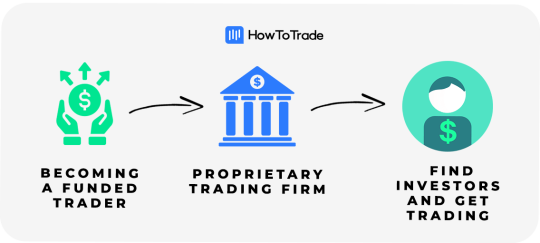
Table of Contents

- What Exactly is a Proprietary Trading Firm?
- Which Path is Right for You? Comparing Traditional and Remote Firms
- The Essential Skillset for Any Successful Prop Trader
- How to Secure a Position at a Traditional Prop Trading Firm
- How to Join a Remote Prop Trading Firm
- What Are the Key Rules in a Funded Trading Environment?
- How to Build a Demonstrable Trading Track Record
- What Does a Typical Day for a Prop Trader Look Like?
- How Can You Advance Your Career in Proprietary Trading?
- Why Choose a Funded Program Like Cointracts?
What Exactly is a Proprietary Trading Firm?
A proprietary trading firm, often called a “prop shop,” is a financial institution that trades stocks, derivatives, currencies, commodities, and other instruments with its own money, as opposed to using clients’ money. The goal is simple: to generate direct profits for the firm. Traders at these firms are given access to substantial capital and sophisticated technology to execute strategies and capitalize on market opportunities.
The Core Concept: Trading with Firm Capital
Imagine being a skilled poker player but having a limited bankroll. A prop firm acts as a wealthy backer who provides you with a large stack of chips to play at the high-stakes tables. If you win, you both share the profits. If you lose, the firm absorbs the losses up to a pre-agreed limit. This arrangement allows talented traders to leverage their skills on a scale that would be impossible with their personal funds, amplifying potential returns significantly.
The Two Dominant Models: Traditional vs. Remote
The world of proprietary trading has evolved into two distinct paths. The traditional model involves on-site employment at established firms like Jane Street, Optiver, or Hudson River Trading. These roles are typically salaried positions with performance bonuses, demanding a physical presence in major financial hubs like Chicago, New York, or London.
The remote model, exemplified by funded trader programs, offers a different approach. These firms provide capital to traders worldwide who can prove their profitability through a rigorous evaluation or challenge. Traders operate as independent contractors, work from anywhere, and earn a high percentage of the profits they generate. This modern structure has democratized access to the profession, focusing purely on trading ability rather than academic pedigree or location.
Which Path is Right for You? Comparing Traditional and Remote Firms
Choosing between a traditional and a remote prop firm depends entirely on your background, lifestyle preferences, and career goals. Each path presents a unique set of opportunities and challenges. Understanding these differences is the first step in charting your course.
The following table breaks down the key distinctions to help you determine which model aligns better with your personal and professional aspirations.
| Attribute | Traditional Prop Firm | Remote Firm (Funded Program) |
|---|---|---|
| Entry Barrier | Extremely high; requires elite academic background (STEM), multiple rounds of intense interviews, and often prior experience. | Low; based purely on passing a trading evaluation. No specific degree or resume is required. |
| Location | On-site, located in a major financial center (e.g., New York, Chicago, London). Relocation is usually necessary. | Fully remote. You can trade from anywhere in the world with an internet connection. |
| Compensation | Base salary plus a performance-based bonus. Bonuses can be substantial but are a smaller percentage of generated profits. | No salary. Compensation is a high percentage (often 80-90%) of the profits you generate. |
| Capital Access | Access to very large pools of firm capital, often integrated into a team-based trading desk. | Access to a sizable funded account upon passing the evaluation. Capital can be scaled up as you remain profitable. |
| Autonomy | Less autonomy. You typically work within a team, executing a specific firm-mandated strategy. | High autonomy. You choose your own trading strategy, style, and hours, as long as you adhere to risk parameters. |
The Essential Skillset for Any Successful Prop Trader
Regardless of the path you choose, a specific set of skills is non-negotiable for survival and success in the competitive trading arena. Firms are not looking for gamblers; they seek disciplined, analytical minds who can manage risk and execute a plan flawlessly.
Quantitative and Analytical Prowess
At its core, trading is a game of probabilities and statistics. You must be comfortable with numbers and possess a strong analytical mind. This includes the ability to quickly interpret data, identify patterns, calculate risk-reward ratios, and understand statistical concepts like expected value and standard deviation. Whether you are a discretionary trader reading charts or a quant developing algorithms, a solid quantitative foundation is essential for making informed decisions rather than emotional guesses.
Technical & Programming Skills
In today’s markets, technology is inextricably linked with trading. For quant-heavy traditional firms, proficiency in languages like Python, C++, or R is often a prerequisite for backtesting strategies and building trading models. For remote traders, technical skills may involve mastering advanced charting platforms, understanding trading execution software, and potentially scripting custom indicators or automated alerts. Familiarity with technology gives you an edge in efficiency and analysis.
The Psychology of a Trader: Discipline and Risk Management
This is arguably the most critical skill and the hardest to master. The market is designed to trigger fear and greed. A successful trader must cultivate immense emotional discipline. This means sticking to your trading plan even after a series of losses, cutting losing trades without hesitation, and not getting euphoric after a big win. Risk management is not just a concept; it is the daily practice of protecting your capital. Firms will not tolerate traders who take oversized risks or violate drawdown rules, as capital preservation is paramount.
How to Secure a Position at a Traditional Prop Trading Firm
Landing a job at a top-tier traditional proprietary trading firm is one of the most competitive pursuits in the financial industry. The process is designed to filter for the absolute best analytical and quantitative minds.
Academic Background and Credentials
Top firms overwhelmingly recruit from elite universities, targeting candidates from STEM fields: Science, Technology, Engineering, and Mathematics. Degrees in computer science, physics, statistics, and applied mathematics are highly valued. A high GPA, participation in math or programming competitions (like the Putnam Competition or ACM-ICPC), and relevant research can significantly strengthen your application.
Crafting a Standout Resume and Cover Letter
Your resume must be a testament to your quantitative abilities. Highlight projects, coursework, or personal endeavors that demonstrate your skills in programming, data analysis, and problem-solving. If you have a personal trading account, showcase a positive track record with detailed performance metrics. Your cover letter should be concise, demonstrating a genuine passion for financial markets and a clear understanding of what the firm does.
Navigating the Intense Interview Process
The interview process is famously grueling. It typically involves multiple rounds that test different skills:
- Mental Math & Probability: Expect rapid-fire questions about probabilities, brain teasers, and logic puzzles.
- Market Knowledge: Questions about market-making, option pricing (Black-Scholes), and trading strategies.
- Behavioral Fit: Assessing your personality, risk tolerance, and ability to work under pressure in a team environment.
Preparation is key. Practice mock interviews and study common brain teasers and probability problems.
How to Join a Remote Prop Trading Firm
The remote proprietary trading model provides an alternative and more accessible path for skilled traders who may lack the traditional academic or professional background. The focus here is not on your resume but squarely on your demonstrated ability to trade profitably and manage risk.
The Rise of the Funded Trader Program
Funded trader programs were created to identify trading talent from a global pool. The premise is straightforward: if you can prove your trading skill in a simulated environment with strict rules, the firm will fund you with real capital. This model eliminates entry barriers like educational background and geographic location, creating a true meritocracy where only performance matters.
Understanding the Evaluation Process (The Challenge)
To get funded, you must first pass an evaluation, often called a “challenge.” This is a period where you trade on a demo account with a set of specific objectives and rules. Common parameters include:
- Profit Target: Achieving a certain percentage of profit (e.g., 8-10%) within a set timeframe.
- Maximum Drawdown: A limit on how much the account can lose from its peak (e.g., 10% total).
- Daily Drawdown: A limit on how much can be lost in a single day (e.g., 5%).
- Minimum Trading Days: A requirement to trade for a certain number of days to prove consistency.
These rules are designed to ensure you are not just a lucky gambler but a disciplined trader who can generate consistent returns while protecting capital.
Strategies for Passing the Evaluation
Success in an evaluation requires a professional mindset. Treat the demo account as if it were real money. Develop a clear trading plan with a defined strategy and strict risk parameters *before* you start. Focus on consistency rather than hitting home runs. The firms are looking for traders who can methodically build an equity curve, not those who risk the entire account on one trade.
What Are the Key Rules in a Funded Trading Environment?
Whether in a traditional or remote firm, rule adherence is absolute. In funded trader programs, these rules are transparent and algorithmically enforced. Violating them typically results in the termination of the account. The two most critical rules are related to drawdowns.
The Daily Drawdown is a cap on the maximum loss you can incur in a single day. It is usually calculated based on the previous day’s balance or equity. The Maximum Drawdown is an overall limit on the total loss your account can sustain from its highest point. This rule prevents a trader from giving back all their profits and more after a good run. Understanding and respecting these limits is the foundation of a long-term career in this field.
How to Build a Demonstrable Trading Track Record
A verifiable track record is your single most valuable asset. For traditional firms, it can set your resume apart. For remote firms, it is the very thing being tested in an evaluation. Start by paper trading on a professional platform to refine your strategy without financial risk. Then, move to a small live account to experience the psychological pressures of trading real money. Document everything: your entries, exits, reasons for the trade, and performance statistics. This journal becomes a powerful tool for self-improvement and a portfolio of your work.
What Does a Typical Day for a Prop Trader Look Like?
A day in the life of a prop trader is less about chaotic action and more about structured routine. It often begins well before the market opens with pre-market analysis—reviewing overnight news, checking economic calendars, and identifying potential trading opportunities. During market hours, the focus is on execution and management, patiently waiting for setups that match the trading plan and managing open positions.
The day doesn’t end when the market closes. Post-market review is crucial for long-term success. This involves journaling trades, analyzing what went right and wrong, and preparing for the next session. This disciplined cycle of preparation, execution, and review is the hallmark of a professional.
How Can You Advance Your Career in Proprietary Trading?
Career progression looks different in the two models. In a traditional firm, advancement might mean moving from a junior trader to a senior trader, managing a larger portion of the firm’s capital, or leading a team of other traders. Success is rewarded with larger bonuses and more responsibility within the firm’s hierarchy.
In the remote funded trader model, advancement is directly tied to your performance. Consistently profitable traders are rewarded with account scaling. This means the firm will systematically increase the amount of capital in your funded account. As your account grows, so does your profit potential. Top traders can manage accounts worth millions of dollars and enjoy some of the highest profit splits in the industry, effectively running their own large-scale trading business with zero personal capital risk.
Why Choose a Funded Program Like Cointracts?
For aspiring traders seeking flexibility, autonomy, and a direct path based on merit, a funded program presents an unparalleled opportunity. Cointracts empowers talented individuals by removing the traditional barriers to entry in the world of professional trading. We provide the essential tools for success: substantial capital, straightforward rules, and one of the highest profit shares in the industry.
By joining a modern prop trading firm like Cointracts, you are not just getting an account; you are gaining a partner committed to your success. Our evaluation process is designed to identify disciplined traders who are ready to take their skills to the next level. Once funded, you have the freedom to trade from anywhere, implement your own strategies, and scale your account based on your profitability. We handle the capital and risk, allowing you to focus on what you do best: trading.
